Skiing in Japan
Expert advice for planning your Japan ski holiday
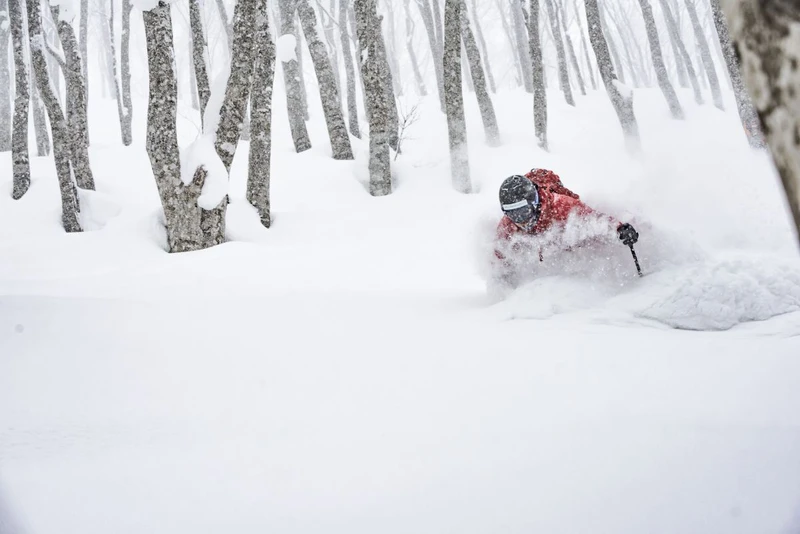
One of the world’s great ski destinations, Japan is famed for the glorious “Japow” snow that reliably arrives every winter and offers a truly unique feel and experience. But there’s a lot more to a Japan ski holiday.
At Ski Safari, we’ve been creating tailor-made Japan trips since 2008 and have one of the largest programmes of resorts and experiences of any international operator. We’ve visited and stayed at every one of our Japan resorts multiple times, and many of our team have also been lucky enough to travel extensively through the country too. Between us, we’ve sampled every experience on our programme, from the snow monkeys to backcountry guiding, bullet trains and city stops.
In this guide, we’ll share our first-hand experience to cover everything from the slopes to the cities, and to hopefully answer any burning questions you might have about skiing in Japan. Here's what we'll cover in this page (click to jump there):
- Skiing in Japan - what to expect
- Where to ski in Japan - best resorts and hotels
- When to ski in Japan
- Japan beyond the skiing
- Japanese food and culture
- Travelling in Japan
- Getting to Japan
- Japan ski holiday costs
- Booking advice

Guide contributors: Andy Knights - Japan Product Manager, Abbie Janzwell - Product & Ski Holiday Specialist, and Andy Evans - Ski Holiday Consultant
1. Skiing in Japan – What to expect
First things first, let’s talk about the skiing itself. For most skiers and snowboarders, Japan sits right at the top of the bucket list, and for good reason.
What is the skiing like in Japan?
Japan is most famous for its powder skiing, and the dry “Japow” snow certainly has a unique feel that skiers and snowboarders adore. That’s far from being the whole story, though - there’s an abundance of well-groomed runs for all abilities. While Japan ski holidays attract a lot of experienced and advanced skiers and snowboarders, intermediates and beginners are also very well catered for and can gain a lot of experience with groomed runs or off-piste sections blanketed in soft, deep and very forgiving powder snow.
Tree skiing is also a huge draw for skiers and snowboarders, and you’ll find easy-access tree runs in every Japanese resort. The Japanese White Birch trees you’ll see lining the pistes are ideal for tree skiing, with most of the branches comfortably above head height. Pretty much everything you can see within resort boundaries is skiable, and you can really get that backcountry feeling without having to trek off into the wilderness.
How does skiing in Japan differ from the Alps/North America?
To state the obvious, Japan is a very different travel experience to North America or Europe - food, culture and day-to-day life all feel distinctly Japanese, and are all part of the adventure. We’ll dive into this further in other sections of this guide, so let’s focus on the skiing for now!
If you’ve skied in the Alps, USA or Canada before, the pisted slopes will feel similar (although perhaps with a thicker blanket of nice fresh snow on top). The most noticeable differences are in the off-piste, backcountry and tree skiing, where the famous “Japow” really comes into its own and offers a truly unique feel and experience. And, for the most part, Japanese resorts have very accessible off-piste. Within the ski areas, almost all of the fresh powder between the groomed runs is fair game, and this includes incredible backcountry runs in powder bowls, meadows, and through the Japanese White Birch trees. This is what Japanese skiing is known for, and you don’t need to go far to find it.

And it’s worth emphasising the powder factor. “Japow” isn’t just a tagline - it’s common for Japanese resorts to receive 20 to 25 days of snow per month from mid-December right through to mid-March.
In terms of the resorts themselves, these are generally smaller than some of the big Alps or North American resorts, where you’ll find miles and miles of connected pistes (although Niseko, Hakuba Valley and Shiga Kogen are notable exceptions with large connected resorts and extensive ski areas to explore). As explained above, however, the fact that there’s so much off-piste and backcountry increases the skiable area dramatically, even in the smaller Japanese resorts.
Why is Japanese snow so good, and why is there so much of it?
Now for the science part, and it’s all down to meteorological patterns and favourable geography.
The process starts in Siberia, where huge, dry and cold air masses form every winter. These are blown east by the prevailing wind, and as they pass over the relatively warm waters of the Sea of Japan, they collect a great deal of moisture and large clouds form. Once these clouds reach the mountains on the western coasts of Japan’s Honshu and Hokkaido islands, they release that moisture as glorious “Japow” snow.
Also, because temperatures remain consistently below zero on the mountains throughout the peak season, there are fewer of those freeze/thaw cycles that produce icy conditions.
I’m not an expert in skiing powder, will I be ok skiing in Japan?
Yes, and this is one of the biggest misconceptions about a Japan ski holiday. Plenty of experts do flock here for the consistency and quality of the powder, but the terrain itself is generally moderate, with groomed slopes catering for everyone from complete beginners to seasoned pros. And while skiing powder requires some adjustments in technique, there’s plenty of opportunity to get used to it and hone your skills, since you’ll find ungroomed powder to the side of almost every run.

Want to know more? In December 2025, we sent Zoë and Chloe from the Ski Safari team to experience "Japow" skiing for the first time. Read about their experience here.
Will it be busy, and will I need to queue for ski lifts in Japan?
Although there are some busy periods such as New Year and (to a lesser extent) Chinese New Year, Japanese resorts rarely feel too busy, and you’re unlikely to ever experience crowds like half term in the Alps or Presidents Day weekend in the US.
January and February are the busiest months, but even then it seems like you have plenty of space to ski, and lift queues are rarely an issue. In our experience, the only regular exception comes on powder day mornings between 8:30am and 9:30am, especially in popular resorts like Niseko and Hakuba, when there’s a rush to get up for first tracks and wait times can be up to 30 minutes. A lot of these skiers are heading up to backcountry gates though, so the slopes still don’t feel overly crowded.
If you want an even quieter experience on the mountain, resorts such as Madarao, Shiga Kogen and Naeba have fewer hotels and are less well known, so usually have fewer queues and crowds as a result.
Two things to note, where booking ahead is often necessary: ski guides are very popular and numbers are limited, so if you’d like to do some backcountry ski touring or in-resort guiding, then it’s worth planning ahead. We can talk you through the options and help you book a qualified English-speaking guide. Restaurants are also popular and the best ones are often quite small, so it’s a good idea to book ahead rather than just showing up. We’ll send helpful dining guides before you travel.
Is ski touring, cat- skiing and heli-skiing available in Japan?
Yes to all three, though they work quite differently. Ski touring is well established, with excellent English-speaking guides available to take you to the best powder. In many resorts, local guides run dedicated touring days, and several resorts have marked backcountry access points for touring alongside their lift-served terrain.

Heli-skiing is possible with Hokkaido Backcountry Club (we don't currently work with them, but they offer a genuinely excellent service). But it’s worth knowing before you commit - Japan's heavy snowfall means helicopters are grounded more often than in Canada, for example, so it isn't necessarily the most reliable way to guarantee untouched powder.
Cat skiing is a better bet for consistency. Snowcats don't need clear skies to run, and you'll easily rack up 10 to 12 runs of untouched powder in a day. One of the best options is Weiss Mountain - a slightly surreal, disused resort next to Niseko Hanazono, where you'll ski smooth former piste runs that once had chairlifts running above them.
Who is Japan skiing definitely not for?
Whilst we firmly believe Japan is an amazing destination for skiers and snowboarders of all abilities, and for anyone wanting more than just a ski holiday, it is a long way to travel if you only have a few days. If you’re travelling from Europe or North America, the flight time makes a weekend break less than ideal! We’d recommend travelling for at least a week (but preferably more!), and we can recommend resorts with shorter travel times if your time is more limited - our team have enjoyed plenty of short Japan ski breaks themselves, and know where and how to maximise your time on the slopes!
Other than time, there are no limitations on who will enjoy skiing in Japan, and the idea that it is just for advanced skiers is very far from the truth.
2. Where to ski in Japan - best resorts and hotel advice
Where are the ski resorts in Japan?
Japan is blessed with a huge number of ski resorts - there are currently over 400 operating resorts and ski areas spread across the country - but these vary hugely in size and quality. Most international operators work with a couple of the most established ones, such as Hakuba and Niseko. At Ski Safari, we've skied and snowboarded extensively throughout the country, and we've chosen and built relationships with nine fantastic resorts, each offering a different experience.
Should I choose Honshu or Hokkaido island?
There are strong arguments for both, and we can arrange a holiday that includes time on each of Japan’s main islands, but which one you choose to spend more time on depends on your priorities.
Hokkaido tends to receive slightly more consistent snow and more powder days, so if time on the slopes and that “Japow” experience is your absolute priority, then this is the best choice for you. Honshu is still very reliable for snow (resorts like Madarao aren’t far off Hokkaido-level powder) and the island also has more varied terrain, but the big draw for many is the cultural experiences. Honshu is where you can visit Tokyo, Kyoto, Osaka, Hakone, Hiroshima and many historic towns, so offers better travel experiences beyond the slopes.
Whatever your priorities, an experienced ski specialist with genuine first-hand knowledge can help you plan an itinerary that ticks the right boxes.
How do I get to ski resorts in Japan?
The table below shows the quickest ways to reach each of our resorts straight from the nearest airport. You may be visiting multiple resorts or adding city stays in your itinerary, so this can vary, but our ski specialists will always plan transport in a way that suits you best.
| Hokkaido Resorts | |||
|---|---|---|---|
| Resort | Fly to | Transport | Transfer time |
| Furano | Asahikawa / Sapporo Chitose | Car hire or transfer | 1 hour / 2 hours 15 minutes |
| Kiroro | Sapporo Chitose | Transfer | 2 hours |
| Niseko | Sapporo Chitose | Transfer | 2 hours 30 minutes |
| Rusutsu | Sapporo Chitose | Transfer | 2 hours |
| Honshu Resorts | |||
|---|---|---|---|
| Resort | Fly to | Transport | Transfer time |
| Hakuba | Tokyo Haneda / Narita | Rail / transfer | 4 hours |
| Madarao | Tokyo Haneda / Narita | Train / transfer | 4 hours |
| Naeba | Tokyo Haneda / Narita | Train & bus transfer | 2 hours 30 minutes |
| Nozawa Onsen | Tokyo Haneda / Narita | Train / transfer | 4 hours |
| Shiga Kogen | Tokyo Haneda / Narita | Rail / transfer | 4 hours |
What are the best ski resorts in Japan?
Best resorts for beginners
Kiroro, Naeba, Shiga Kogen and Rusutsu (West Mountain) each work for different reasons: Kiroro is quiet and gentle, with far fewer skiers around than Niseko or Rusutsu. Naeba has dedicated learning terrain, a genuinely ski-in ski-out hotel and even a small indoor ski slope for children. Shiga Kogen's long, wide runs are ideal for progression, though there's less to do off the mountain. Rusutsu's West Mountain is where the ski school is based, with a good spread of green runs for building confidence before graduating to the tougher East Mountain.
Best resorts for intermediates
Japan has a lot to offer for intermediate skiers and snowboarders. Nozawa Onsen stands out, with fast, easy-to-navigate pistes including the famous 10 km Sky Line ridge run. Naeba and the connected Kagura offer some of the quietest, best intermediate freeride terrain in Japan. Madarao has a bunch of really fun, low-gradient tree skiing and rolling pisted runs. Shiga Kogen arguably tops the list with its long and wide runs - perfect for honing those carving skills. Niseko and Hakuba also suit intermediates well, thanks to sheer range of terrain and strong ski school and guiding options.
Best resorts for advanced skiers and experts
Rusutsu's East Mountain and Mt Isola have the longest, steepest runs and an "if you can see it, you can ski it" approach within the ski area boundary. Furano has some excellent advanced terraina notably relaxed attitude to off-piste, with untouched snow in the trees between runs even days after a storm, plus a huge guide-accessed backcountry. Hakuba Cortina gets the most snow in Hakuba Valley (12 metres a season) and has a liberal approach to off-piste, as well as challenging moguls and one the steepest lift-accessible vertical drops in Japan. If tree skiing is your jam, both Kagura (connected to Naeba) and Madarao have an abundance of world-class options, empty slopes and powder laps for days.
Best resorts for off-piste
Niseko leads here, with the most accessible backcountry in Japan and established guiding and cat-skiing operators like Whiteroom Tours and Niseko Weiss Powder Cats. Furano's backcountry is huge, accessed via four registered points, with untouched powder in the trees on-piste too. Kiroro has dedicated in-bounds off-piste areas plus a hike-to backcountry with three access points. Hakuba Cortina is the go-to within Hakuba Valley for its liberal off-piste policy and mature-tree terrain.
Best resorts for families
Rusutsu is probably Japan's best resort for families, with West Mountain built around beginners and kids, plus a children's snow park, tubing and snow biking. Naeba has a small indoor ski slope for children and genuine ski-in ski-out convenience. Niseko and Hakuba both work well too, with a wide choice of accommodation, strong ski schools and enough off-mountain activity to fill a rest day.

Best resorts of mixed-ability groups
In pure skiing terms, all of our resorts have enough slope variety to entertain mixed-ability groups. Niseko and Hakuba are probably the strongest choices though, offering steep terrain and trees for confident skiers alongside long groomers and cruisy greens for beginners, with plenty of lessons and guiding so everyone can ski at their own level and regroup at the bottom. The villages also offer plenty beyond the skiing, just in case anyone wants a day off from the slopes.
Best resorts for après-ski
The most well-known resort for nightlife is Niseko, which has an international feel more akin to Whistler or the big Alps resorts. Hirafu Village is the epicenter for Niseko’s après-ski, with Freddie’s and the famous Bar Gyu AKA ‘Fridge Door Bar’ always popular. Furano is not on the apres hit list but still has a couple of lively bars at the Kitanomine base area - AJITO is a great spot for the sports bar vibe, with darts and pool tables to go with your post-mountain beers.epicentre
Elsewhere, Hakuba also has a lively après scene with a nice mix of traditional izakayas (small pubs) and more European-style bars. There’s also a daily party at Hakuba Après by HHG, right at the base of Nakiyama slope, with live music and drinks outdoors before the party moves inside after sunset. Nozawa Onsen offers a more distinctly Japanese evening experience, where skiers can enjoy natural Onsen baths alongside cosy izakayas and family-run yakitori stalls.
What is the ski accommodation like in Japan?
All of our Japan resorts offer hotels, and in several cases you'll also find apartments, chalets and traditional ryokan, some with tatami flooring and futon bedding, or a blend of both styles. Every resort on our programme has at least one Western-comfort hotel too, so you won't need to sleep on the floor unless you want to. Natural onsen or heated bathhouses are very common in Japanese ski hotels of all types.

Resort towns and villages are often closer to what you'd find in North America or Europe than you might expect: the architecture varies, but the comfort doesn't. Accommodation ranges from convenient, Japanese-style ski-in ski-out hotels to budget-friendly hotels and apartments, right through to 5-star luxury hotels, stylish multi-bedroom apartments and private chalets.
We work with a number of different options in each resort, so you’ll have plenty of choice depending on your preferences and budget. Here are a few to give you a taste of what to expect;
- Mid-range - Always Niseko 3* - Located in a peaceful location not far from the popular Hirafu village and lifts, this place offers minimalist style, modern facilities and comfortable rooms, without breaking the bank.
- Traditional - Tokiwaya Ryokan 4* - Dating back to the 1600s, and located in the heart of Nozawa Onsen with its own hot spring bath, this traditional ryokan is a great way to get the true Japanese ski experience.
- Luxury - Skye Niseko 5* - A great option for some high-end luxury in Niseko, located right on the slopes for ski-in ski-out convenience. An excellent restaurant, concierge service, spa and onsen are all on-site.
- Self-catered - Phoenix Chalets 4* - Set amongst the forest just a few hundred metres from the slopes in Hakuba, these spacious chalets are a stylish and very comfortable choice for larger groups. A concierge service is available for convenience.
One thing worth knowing in advance: twin beds are the norm in Japan, though in most cases hotels can convert these into a king on request.
What’s the difference between staying in a ryokan vs. a Western-style hotel?
A ryokan is traditional Japanese accommodation: tatami mat flooring, low tables with floor seating, and futon bedding that's rolled out at night. Many ryokan are now semi-traditional, pairing Western beds with everything else kept authentic, and some include your own private onsen.
Most ski resorts are predominantly Western-style hotels, but a few have a twist. Some Niseko hotels offer multi-bedroom western-style suites with a separate tatami sleeping room, so you can enjoy a night or two on traditional futon beds, sometimes with a private onsen on the balcony.
Should I stay slopeside/ski-in ski-out, or in the nearby town?
That depends on your budget and priorities, and is certainly a decision where ski specialist advice comes in very useful. Some resorts only offer slopeside, ski-in ski-out accommodation, while others offer a mix of both.
Staying slopeside usually comes at a premium, but there's something to be said for stepping straight out of your hotel and onto the snow. In resorts like Niseko, Furano and Hakuba, these are practically ski-in villages, and even accommodation that isn't technically ski-in ski-out is often only a 5-minute walk or less from the lifts, so you're rarely far from the snow either way.

Our newer resorts, Shiga Kogen, Naeba and Madarao, all offer ski-in ski-out accommodation too, but they're a different experience to bigger names like Hakuba, Nozawa Onsen and Niseko: quieter, and often based around a single hotel with everything on site. These suit skiers whose priority is quiet slopes and excellent snow, rather than the village experience or a massive choice of restaurants and bars (although the Naeba Prince Hotel has over 25 restaurants on site!).
What is there to do in Japanese resorts apart from skiing?
Most resorts offer activities to fill a day off, or an evening after the lifts close. Rusutsu is a standout for families, with a huge indoor wave pool inside the Rusutsu Resort Hotel, while Naeba's hotel is built as a self-contained "snow wonderland" with over 25 restaurants under one roof. Niseko has the widest range of activities of any of our resorts, from snowmobiling through backcountry trails and forest to snowshoeing and snow tubing, and Hakuba offers similar snowshoe tours through quieter forest areas of the valley. A trip to see Japan's wild snow monkeys at Jigokudani Monkey Park is another popular day out, easily done from either Shiga Kogen, Hakuba or Nozawa Onsen.

Onsen bathing is one of the best ways to unwind after a day on the slopes, and most resorts have options on-site or nearby (more on that below).
Are onsens (hot springs) common near ski resorts?
Yes, plenty of hotels and apartments have their own. They're typically separated by gender and clothing-free. It's a little intimidating at first for most visitors, but a genuinely wonderful way to soothe tired legs after a big day on the slopes. If your hotel doesn't have one, there's usually a local onsen nearby. Niseko and Hakuba both have good local options, and Nozawa Onsen has plenty to choose from. Just steer clear of the one the locals use to boil their eggs!
Note: the term “onsen” specifically refers to baths fed by natural hot springs. In resorts where this isn’t possible, you’ll almost always find similar bathhouses that are artificially heated.
3. When to ski in Japan
How long is the ski season in Japan?
Japan’s resorts generally open by early to mid-December, but the true "Japow" experience arrives after New Year and lasts until early March.
From mid-March into April, temperatures rise and snowfall depletes, but there are still some great spring skiing opportunities and the chance to overlap with the cherry blossom season.
If you’re planning to ski during shoulder seasons and want more reliable snow conditions, our advice is to spend more time on the slopes of Hokkaido island - the northern of Japan’s two main islands - or visit Shiga Kogen on Honshu. If you pick the right resort, you’ll often find excellent snow quality through April and even into May.
What is the best month to ski in Japan?
January, February, and early March deliver Japan’s deepest and driest snowfall. This is the peak “Japow” powder season that skiers and snowboarders rave about, with daily top-ups and incredible off-piste and backcountry conditions.
Any ski holiday in this period is likely to be blessed with excellent conditions, but if you prefer your temperatures a little milder, then the beginning of March is a great option.
Is Japan good for Christmas, New Year, Easter, and Half-term breaks?
Although Christmas is celebrated in Japan, it isn’t the same major national holiday as in Europe or North America. Christmas Day is a normal working day for Japanese people, and the annual tradition is KFC rather than roast turkey (seriously!). Snow conditions are usually excellent by late December so this can be a great week to ski and spend an unusual Christmas.
By contrast, New Year week (around 29th December to 3rd January) is Japan’s biggest holiday. It’s a lot of fun, with elaborate decorations and illuminations in the cities, but you should expect very busy slopes and higher prices than usual. You’ll also need to book well in advance, since a lot of the best hotels will be filled with domestic tourists.
February half term falls right in the “Japow” season, so it’s a wonderful time to ski in Japan. You can take your pick of the resorts and expect excellent conditions throughout.
Easter is a lovely time to visit and ski in Japan, with milder temperatures and the chance to see the cherry blossom season. On the slopes, the peak “Japow” season is over, but conditions still offer excellent spring skiing opportunities, especially on Hokkaido island and Shiga Kogen on Honshu. Although increasingly celebrated as a commercial event, Easter is not a Japanese holiday so the resorts should be relatively quiet. It’s worth noting that flights around late March and April can get expensive - this is a business travel peak and there’s also a rush for cherry blossom season, so get those flights booked as early as you can (ideally May the year before).
One other holiday to take note of is Chinese New Year, which often sees an influx of skiers from China hitting the slopes. The exact date changes each year (usually between late January and mid February).
How cold is it at Japan’s ski resorts?
On average, Japan’s resorts are slightly colder than the Alps, but don’t often face the extreme cold you might encounter at times at inland North America resorts. Hokkaido is further north than Honshu, so is typically a couple of degrees cooler.
The table below shows average temperatures at the resort bases, but it can feel significantly colder on the mountain once you’re exposed to that wind blowing through from Siberia. This is all great news for snow conditions, but means you may need to wear an extra layer or two compared to your standard Alps ski clothes. Make sure you have high-spec waterproof attire, and a buff or balaclava is also recommended to protect your face against the powder spray.
| Estimated average daytime temperature at resort base. Data Source: Japan Meteorological Agency (JMA) 30-year historical climate averages | ||
|---|---|---|
| Hokkaido Resorts (e.g., Niseko, Rusutsu, Kiroro, Furano) | Honshu Resorts (e.g., Hakuba, Nozawa Onsen, Madarao) | |
| December | 0 °C to -2 °C | 1 °C to 3 °C |
| January | -2 °C to -4 °C | -2 °C to 0 °C |
| February | -2 °C to -3 °C | -1 °C to 1 °C |
| March | 1 °C to 3 °C | 4 °C to 6 °C |
| April | 8 °C to 10 °C | 11 °C to 13 °C |
4. Japan, beyond the skiing
Which cities should I consider visiting on my Japan holiday?
Skiing is only part of the story on a Japan holiday (albeit a very good part!), and most of our customers choose to spend some of their trip exploring the country’s cities, culture, food and history.
The majority of international flights to Japan will be into (or at least via) Tokyo, so it seems a no-brainer to spend a night or two in one of the world’s truly great cities. Tokyo is a dizzying mix of the ancient and the hyper-modern, from the calm of Meiji Shrine and the temples of Asakusa to the sensory overload of Shibuya crossing and Harajuku's shopping streets.
Osaka is famous for its food, with a neon-lit street food scene built around dishes like takoyaki, the octopus-filled batter balls the city invented. Kyoto, meanwhile, is Japan's former capital and cultural heart, home to the thousands of vermilion torii gates at Fushimi Inari Taisha, the temple of Kiyomizu-dera and the geisha district of Gion, and it's easy to combine a visit with a tea ceremony or kimono experience. For foodies, Kobe is well worth a visit too. The city is best known for its Kobe Wagyu beef, some of the most sought-after in the world.

Hiroshima is a vibrant city that combines two very different experiences - the sobering history of the Peace Memorial Park and Atomic Bomb Dome, and the natural beauty of nearby Miyajima Island, where the Itsukushima Shrine's torii gate appears to float on the water. Kanazawa is one of Japan's best-preserved historic cities, with the beautiful Kenrokuen Garden and the Higashi Chaya geisha district's lantern-lit streets.
Okinawa is a different Japan entirely: a subtropical island chain with white sand beaches and coral reefs, distinct Ryukyu culture, and a genuinely warm, laid-back pace - a striking contrast if you're coming straight from the snow.
Whilst the above cities feature prominently as part of our Taste of Japan, Traditions of Japan, Flavours of Japan and Histories of Japan Ski & City Safaris, we also help a huge number of our customers explore further afield. Hakone and Lake Kawaguchi are perfect for Mount Fuji views, and Sapporo - the main city on Hokkaido - is a lively place that hosts an incredible Ice Festival each winter.
What is a Japan ski safari?
A Japan ski safari is any holiday that combines multiple ski resorts, or involves city stays and cultural experiences in addition to skiing. Most of our customers end up turning their ski holiday into a ski safari of some kind, and the options available are extensive.
We’ve put together a selection of Japan ski safari itineraries to give you inspiration and show you what’s possible, but every holiday is tailor-made. Just let us know your interests, dates and budget, and your ski specialist can design the perfect Japan ski safari for you.
5. Japanese Food and Culture
What will I eat and drink in Japan?
Japanese food is loved the world over, but it’s even better when you’re actually there. Expect a genuinely wide range, well beyond the ramen and sushi most visitors picture beforehand. Ramen, katsu curry, yakitori and fresh seafood are resort staples, and priced far more reasonably than you might expect. Hokkaido has its own specialities worth seeking out too, among them soup curry and jingisukan - grilled lamb cooked at the table. For something more formal, a kaiseki dinner (a traditional multi-course tasting menu) is well worth experiencing. And if your trip takes in Kobe, the wagyu beef is considered by some to be the best in the world.

To drink, hot sake is a natural match for a cold mountain evening. Hokkaido is also home to Nikka's Yoichi distillery, one of Japan's most celebrated whisky makers.
You can also look forward to all sorts of unfamiliar snacks, particularly from the incredible vending machines you’ll find in hotels and various public places. These machines serve everything from confectionery to canned bread, alongside beer, hot drinks, and even full heated meals.
What if I’m vegetarian or vegan?
Although very few Japanese people are vegetarian or vegan, you can still eat very well with a little pre-planning. This is especially true in the cities, where apps like HappyCow can help you locate specific vegan/vegetarian restaurants.
In general, you can easily order meals with no meat, but be aware that fish and meat stocks are widely used in Japanese cooking. To be more confident about what is being cooked for you, we’d recommend printing out a card with a Japanese translation, stating that you don’t want anything cooked with animal products.
What is the culture like in Japan?
Japanese popular culture is one of the country’s greatest exports - you’ll probably be somewhat familiar with Japan’s weird and wonderful tech and animation in particular, and there are some truly bizarre travel experiences to be had in the big cities. But this is also a country where the ancient ways are revered and respected, and there’s a sense of order and formality that still defines the Japanese way of life today.
Japanese people go about their daily lives with quiet consideration for others, and it's one of the first things visitors notice. Public spaces, trains and lifts stay noticeably hushed compared with the UK, queuing is orderly and unhurried, and littering is essentially unheard of.
Here are a few things to be aware of when you travel;
- Bowing is the standard greeting, even for brief, casual interactions.
- Shoes should come off before entering someone's home or certain traditional accommodation (it's worth having a pair of shoes that are easy to slip on and off).
- If you’re ever paying with cash, place it on the counter rather than directly in the vendor’s hand.
- Chopsticks should never be left standing upright in your food.
- It’s somewhat frowned upon to eat and drink on the move - Japanese people will always find somewhere to sit or stand while eating.
- But if you loudly slurp while eating your noodles, that’s absolutely fine and the chef will even take it as a compliment!
The same considerate approach carries onto the mountain. Japanese skiers are very polite and always observe proper lift etiquette when loading and unloading - this matters more here than you might be used to elsewhere. None of this makes Japan hard to navigate - if anything, the orderliness and consistency make it one of the more relaxing countries to travel in.
Should I tip in Japan?
No, tipping isn't customary in Japan, and you won't be expected to add anything to a bill, whether that's on the mountain, at a restaurant, or for a guide. Excellent service is simply the standard, not something tipped for separately. If you'd like to show appreciation, a simple bow and a thank you (“arigatou gozaimasu”) goes a lot further than cash left on the table, which can occasionally cause more confusion than gratitude.
Do people speak English? Will I get around OK without speaking Japanese?
Yes, you'll get around just fine. English is widely understood in the ski resorts, hotels and most restaurants, and you'll typically find English signage, English menus and English-speaking staff throughout. That said, learning a few basic phrases goes down well and can genuinely add to the experience, even if it's never essential.
In the cities, you’ll also find that most signage, ticket machines and announcements will have an English translation. And if you ever get stuck, Google Translate is a wonderful tool to have in your pocket.
Younger Japanese people learn English in school so are usually able to communicate quite well, although the differences between the two languages is significant (as anyone who’s tried to learn Japanese will attest!). Older people may not speak English, but you’ll find most people very polite and patient, so most situations can be navigated with some gestures, smiles and a good translation app.
6. Travelling in Japan
How do Japan’s bullet trains (Shinkansen) work?
Riding the Shinkansen is one of the genuine highlights of a Japan trip, and it's often the best way to reach the Honshu resorts and to travel between cities. If you're booking a Ski & City Safari or multi-resort itinerary with us, we'll include the most suitable rail pass for your trip, such as the JR Pass, alongside other regional options like the Hokuriku Arch Pass, some of which come with useful extras like free activities or access to local transport and cable cars.

You'll validate your pass at a JR ticket office, usually found at the airport you fly into, where you can also book specific seats and times. We'll talk you through the whole process before you travel so it's as smooth as the trains themselves, which reach speeds of up to 300 km/h!
Can I take my skis or snowboard on the bullet trains?
Technically yes, and luggage carriages can be reserved in advance. In general, however, carrying large ski or snowboard bags on public transport tends to draw disapproving looks. As explained earlier, the Japanese have a strong sense of consideration for others.
If you’re bringing your own gear, let us know in advance so we can advise and make suitable arrangements. One very common approach is Japan's luggage forwarding service, Yamoto, which moves your bags on ahead so you can travel unencumbered. This is especially useful if you’re planning to visit Japan’s cities after skiing. Hotel staff can arrange this for you, typically for around £30 for a ski bag, and your equipment will be waiting at your next hotel by the time you arrive.
How do the transfers work in Japan?
Shared and private transfers are both available, and we book these in advance for our customers, using trusted suppliers with modern, safe and comfortable vehicles. These can be shorter transfers to take you from a bullet train station up to your resort, or standalone road journeys where trains aren’t the best option for you. We’ll always advise based on your particular group and route, and will provide clear vouchers and instructions to find your vehicle and driver.
Should I rent a car in Japan?
Japan’s transport network is excellent, so having a car is not necessary for most holidays. Having said that, a suitable car can be very helpful when accessing lesser-known, off-the-beaten-track resorts. If having a car is the right choice for your itinerary, we’ll advise you when planning.
Driving in Japan is easy and safe compared to most countries - people observe the rules and road rage is virtually non-existent. When renting a car, you do need an IDP, International Driving Permit. These are easy to obtain through some post offices in the UK. It's worth noting that if you want to drive ‘Mario Karts’ around the streets of Tokyo (as some of our staff did!) you will need the IDP for that.
How does public transport work in the cities?
City transport is straightforward and you’ll see English translations on most signage. The SUICA card is the easiest way to get around, and works much like an Oyster card in London - simply top it up with funds then tap on and off for buses, the metro and local trains (though not the Shinkansen, which needs a separate ticket or pass). You purchase digitally and add it to your phone wallet if you have an iPhone, or physical SUICA cards are easy to pick up on arrival.

7. Getting to Japan
What airports can I fly to Japan from?
From the UK, there are daily direct flights from London Heathrow to Tokyo Haneda which take around 13 hours 30 mins. From regional UK airports, you’ll need a connecting flight. If you’re heading to the resorts of Hokkaido island, you can travel on a connecting flight to Sapporo or Asahikawa, taking an additional 1 hour 40 mins.
From North America, there are direct flights to Tokyo Narita from multiple cities. From the US: Los Angeles, San Francisco, Seattle, San Diego, Dallas, Houston, Honolulu, New York, Chicago, Washington D.C., and Atlanta. From Canada: Vancouver and Toronto. And for anyone wanting to head straight to the slopes of Hokkaido, new direct routes to Sapporo Chitose from both San Francisco (United Airlines) and Vancouver (Air Canada) are on sale for December 2026 through to March 2027. Flight times range from 10 hours to 14 hours.
Can I bring my own skis or snowboard to Japan?
You can, and many long-haul flights to Japan have a generous luggage allowance. Typically, British Airways and Japan Airlines include 2 × 23kg checked bags as standard, one of which may be a ski or snowboard bag. An additional ski bag will be around £70 return.
8. Japan ski holiday costs
Is Japan expensive?
In the past, Japan had a reputation for being a very expensive country to visit. However, in recent years the Japanese Yen has been significantly weaker, especially compared to most Western currencies, so a lot of visitors are pleasantly surprised by the day-to-day costs they encounter for things like local transport and food.
Long-haul flights and ski costs are an extra factor, of course, which we’ll explain below.
How much does a Japan ski holiday cost?
For European and North American skiers, the flight costs alone mean that Japan is rarely the cheapest option for a ski holiday, but there’s value to be found if you know where to look. And anyway, we’re firmly of the opinion that Japan offers something worth paying for!
“How much does it cost?” is a difficult question to answer, especially for a company like ours since we tailor-make every holiday from scratch - no two holidays are the same, and a lot depends on your dates, resorts, and whether you add on city stays or other experiences.
To give you an idea of what to expect, our popular Niseko & Tokyo Ski & City Safari starts at £3,185 per person. This includes international flights from London, domestic flights to Niseko, 7 nights B&B at the 3*+ Always Niseko, 2 nights at a 4* hotel in Tokyo, and a transfer. On top of that, you'll need to budget for lift passes, ski hire if needed, and daily spending on food and drink. We'll give you an idea of those extra costs below, and we can arrange lift passes and ski hire in advance to help you get the best price.
How much are lift passes in Japan?
This varies between resorts, of course, but you should expect a lift pass to cost £40-50 per day on average.
Can I use my IKON or EPIC pass in Japan?
Yes! For IKON pass holders you have 7 days use at Niseko United and Furano (Hokkaido) and 7 days at Madarao, Shiga Kogen and Lotte Arai (Nagano). Ikon base passes are entitled to 5 days in each, with no restrictions.
For EPIC pass holders, you are permitted 5 days at Rusutsu and 5 days at Hakuba Valley.
(If you don’t already have one of these passes, we wouldn’t recommend purchasing one specifically for Japan - local lift passes are almost always cheaper.)
How much is ski hire in Japan?
Costs vary between resorts, but as a guideline figure, you should expect to pay around £30-40 per person per day for skis or snowboard, boots, poles and a helmet.
How much are ski lessons and ski guiding in Japan?
For a full-day group lesson (either skiing or snowboarding), you should expect to pay around £100. Private lessons can be arranged for around £400 (up to six people), backcountry ski guiding can be booked for £535-£835, and in-bounds resort guiding for £380-£480 for up to five people.
How much is food and drink in Japan?
As with many places in the world, prices for food and drink within the ski resorts is higher than you’ll find elsewhere, but the difference is perhaps a little less stark than in the Alps, for example. You should expect to pay £10-15 for a really hearty lunch on the mountain, while a good coffee will be £3-4 and your post-ski beer £4-6. In the cities, you’re likely to pay 10-20% less.

Of course, eating at street food stalls or ramen shops can be a cheaper (but still delicious) option, and there are plenty of higher-end restaurants around if you want to treat yourself. For example, a multi-course traditional Kaiseki dinner or an authentic Kobe Wagyu beef dish may be more in the £80-160 range.
9. When should I book my Japan ski holiday?
Although we can sometimes arrange Japan ski holidays at relatively short notice, especially during the 'shoulder seasons', it's best to plan as far ahead as possible ahead to give yourself the best choice of flights, resorts and accommodation. To speak with a Japan ski specialist, call 01273 224060 or request a quotation online and we’ll be in touch.
Why book with Ski Safari?
Knowledge - Everyone on our Japan team has skied in multiple Japanese resorts, often multiple times, and we’re lucky enough to have travelled the country extensively too. So, every recommendation we make is based on genuine first-hand experience.
Service - Your holiday will be built from scratch, just for you, and tailored to your wants and needs. Speak to your own dedicated Ski Specialist every time - no question or detail too big or small!
Value - Tailor-made service doesn't mean overpaying. We understand the market inside out and have built supplier relationships over many years, so we know how to build a great-value Japan ski holiday.
Consistently excellent feedback - 4.9/5 on Feefo, amazing reviews, and customers who’ve been booking with us for over 20 years!
We've also won 'Best Small Travel Company for Ski/Winter Sports Holidays' in the British Travel Awards every year from 2019 to 2025.

Interested?
Let’s start crafting your perfect tailor-made ski holiday
Every holiday is tailor-made, just for you. Our ski specialists will look at your enquiry and will be in touch within a day or two. We promise it's worth the wait!