Trip Report: Testing New Resorts in the Japanese Alps

There are over 400 ski areas across Japan’s main islands, from major international resorts like Niseko and Hakuba, to tiny one-lift local hills with little more than a car park and a ticket kiosk at their base - much like where I used to ski when I lived in central Hokkaido from 2010 to 2015!
When deciding which resorts deserve a spot on our programme, the big question for us was which would deliver the best experience for our customers?
As you may know, we only sell resorts that we have visited and skied ourselves. So in March 2026, I travelled to Japan with our Founder Richard and Japan Product Manager Andy Knights to revisit two old favourite resorts, and to discover a couple of new ones. Read on for the big reveal, and to find out where we went, why we went there, and who we think each new resort will appeal to.
Drumroll, please…
Naeba
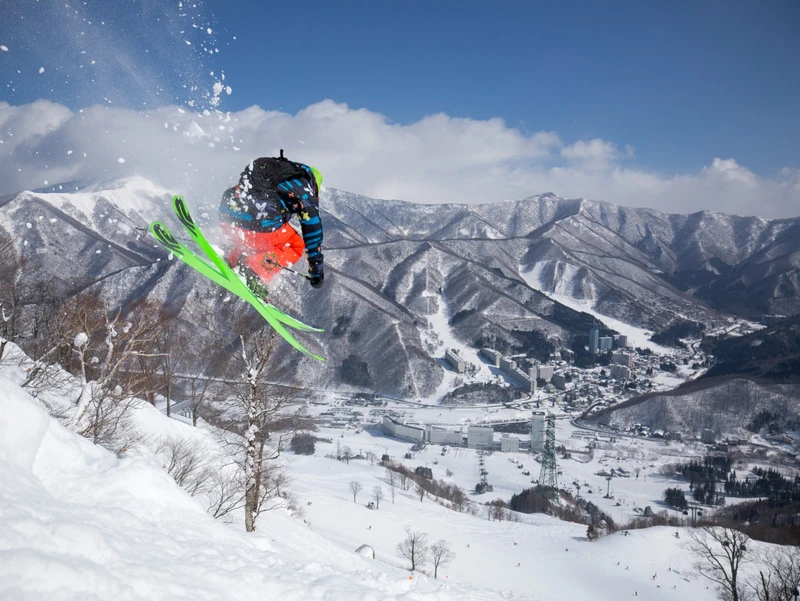
Naeba is one of the closest major resorts to Tokyo. On the high-speed bullet train, it’s just 1 hour and 15 minutes from Tokyo Station to Echigo Yuzawa in the heart of the mountains, then a short shuttle bus to the resort. Most flights from the UK land in Tokyo in the early morning, so it’s totally possible to arrive in time for a late lunch and an afternoon ski. And that is one of the huge selling points of Naeba - what better way to make the most of a travel day than a few hours on the slopes?
We took a slightly different route and picked up a rental car at the airport. We drove through the centre of Tokyo - with fantastic views across to Mount Fuji! - stopped for lunch along the way and were still on the slopes by mid-afternoon! You can even ski until 8:30 pm under the floodlights if you really want to maximise your time on the snow.
We made the most of the night skiing with quiet laps of the E1 run, alternating between boot-deep powder beside the pistes and a few jumps and rails in the terrain park before a quick dip in our hotel's onsen (hot springs) to round off a great first day.
What's the skiing like in Naeba?
Naeba Ski Resort is connected to the thrilling neighbouring Kagura Ski Resort, forming the expansive ‘Mt Naeba’ ski area. We spent careful time exploring both in depth, and were impressed by how effortlessly both resorts flowed into each other.
Naeba
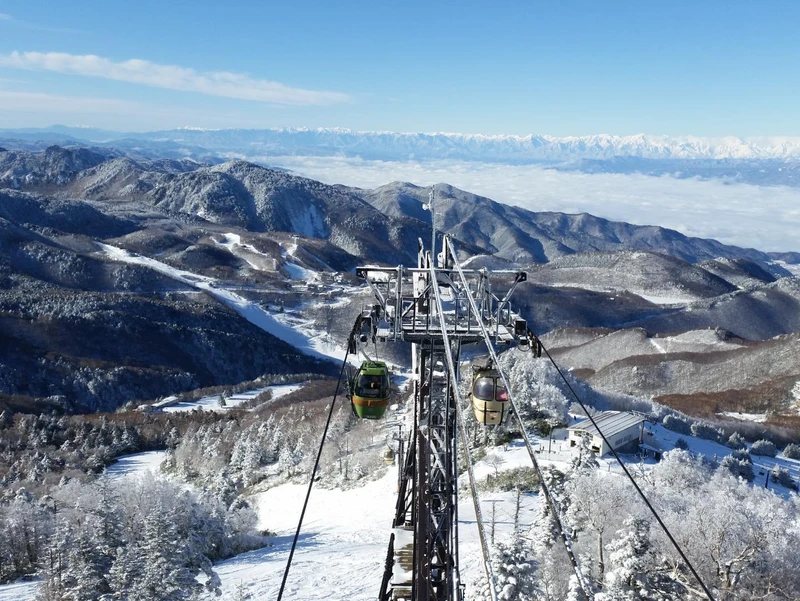
The skiing at Naeba will appeal to anyone, and we did our best to explore as much of the area as we could. Having experienced all of the wide, open and more mellow slopes at the resort base during the night skiing the evening before, we headed straight up the main Prince Gondola to the higher part of the mountain. This gave us a range of steeper top-to-bottom runs, plus some ungroomed areas where, even in mid-March, we found some untouched powder stashes.
We then headed over to looker’s right of the mountain, where we boarded the ‘Dragondola’, Japan’s longest gondola, which links Naeba to the next-door resort of Kagura.
Kagura
Kagura complements Naeba perfectly: Naeba the yin, Kagura the yang. Naeba’s convenient, approachable, snow-sure resort, paired with Kagura’s sprawling, freeride powder paradise, and together they make up the Mt. Naeba ski area.

We reached Kagura at about 11:30 in the morning, and as we got off the gondola, we saw huge areas of untouched powder. There was, almost literally, no one there. We took lap after lap through accessible trees or next to the lifts, riding shin-to-knee deep powder with no competition for fresh tracks. We explored as much as we could, but really only scratched the surface! It gave us a real feel for the enormous potential these two connected resorts have.
What is the accommodation like in Naeba?
Naeba is a purpose-built resort, and a product of Japan’s ski boom in the 80s and 90s, when the economy was strong and snow sports were the newest and coolest pastime for the Japanese. In Naeba's case, this resulted in an impressive resort hotel complex, the 4* Naeba Prince Hotel, which, although not traditional or historic, feels brilliantly Japanese, designed for comfort and convenience.

I’ve visited Naeba a couple of times before, but this was my first time staying at the Naeba Prince Hotel. In my past experience with the hotel, the rooms were reserved for artists and VIPs in connection to Japan’s largest music festival, Fuji Rock, with stages positioned around the foot of the slopes. So it was a real treat to see inside with my own eyes!
The hotel is made up of several different wings, each with its own access point to the slopes, ski rental, onsen and a range of restaurants. Everything you need is under one roof, and wherever your room is, you couldn’t be more ski-in ski-out. We were particularly impressed with the Night Market, an indoor alley of small food stalls and bars where we enjoyed an evening sampling some street food and local sake.

Who will enjoy Naeba?
- People who value convenience. With the short transfer from Tokyo, it’s one of Japan’s most easily accessible resorts. A one-week holiday is possible here, or if you happen to be in Tokyo and fancy squeezing in a few days of skiing, Naeba is perfect.
- Families. The ski school and beginner areas are right outside the hotel. There’s even an indoor dry slope for kids to learn their basic snowplough if the weather outside is snowy.
- Mixed ability groups. The less experienced skiers will flourish on Naeba’s lower slopes, while the more advanced can jump on the Dragondola to explore the powder and freeride lines in Kagura.
View our Naeba ski holidays
Madarao
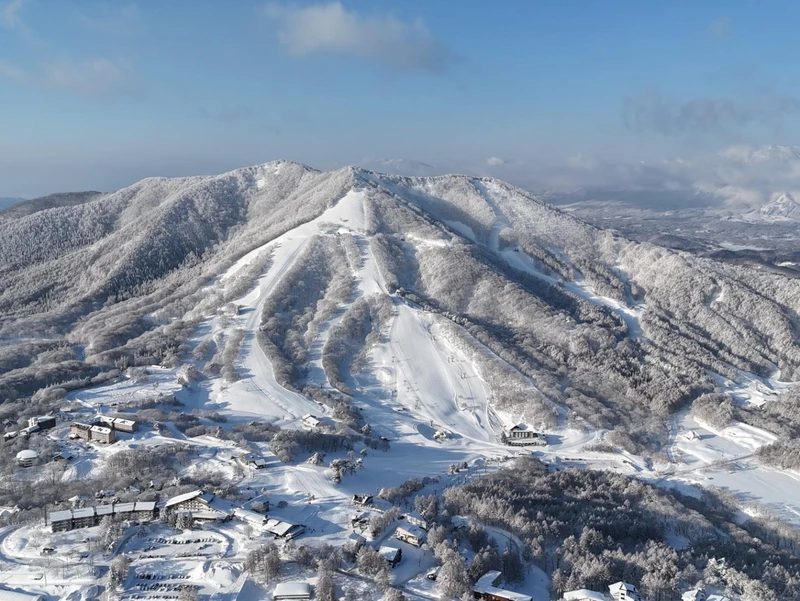
Next, it was time to explore the second mountain on our itinerary: Mount Madarao, home to the connected resorts of Madarao and Tangram. Richard had visited before, and we knew of its nickname, ‘Mada-pow’, coined for the resort's north-facing bowls that act like a snow magnet and receive up to 15 metres of snowfall each winter.

We drove over early in the morning to look around the resort-style hotels at the base of each area before hitting the slopes. We were in safe hands with Ashida-san from Madarao’s ski patrol, a lifelong local who knows the terrain and ski area better than anyone. Looking up from the base at Madarao, on the border of Niigata and Nagano prefectures, our eyes were immediately drawn to the tree-lined ridges above us, which had the tell-tale white dusting of fresh snow.
What's the skiing like in Madarao?
Ashida-san dutifully showed us around the marked pistes and on-mountain facilities to start the day, highlighting the perfectly groomed beginner and intermediate slopes, then progressing to the steeper runs higher up. We were impressed. Both resorts skied well, and the links from the Madarao side over to Tangram were quick and easy.
A lot of boxes were ticked, and we felt pleased that we’d included the resort on our itinerary. But I think Ashida-san could sense that we were still keen to see more and to get into the trees. While we were skiing, he was quietly sussing us out, checking to see if we were worthy of seeing the real Madarao, the areas not shown quite so clearly on the piste map and the magic ingredient that makes it a genuine hidden gem…
Tree skiing
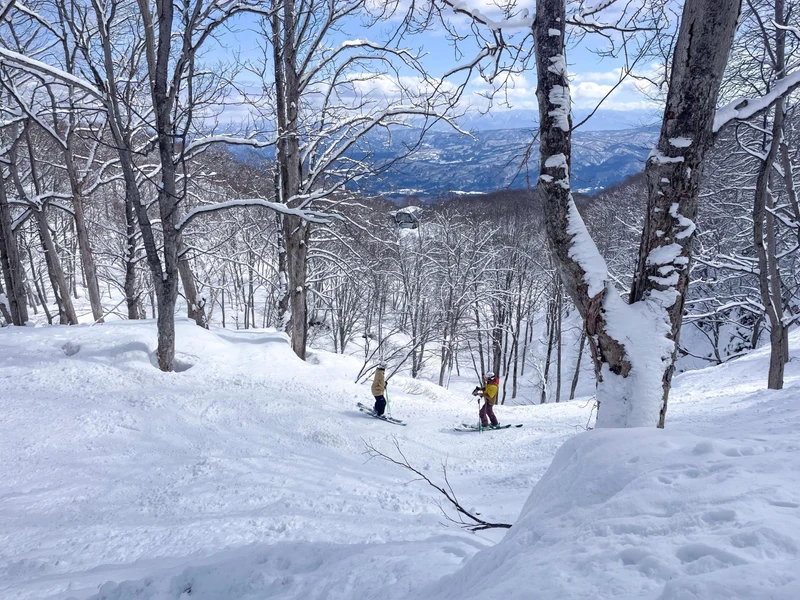
We started off in the more mellow River Line and Kamoshika areas, which are lower down on the mountain and give a perfect introduction to tree skiing. The wide open spaces between trees give plenty of time to plan turns ahead and find a route through, meaning even intermediate skiers can get a taste of the off-piste, between the trails.
In the summer months, the resort actively cuts back the undergrowth and bamboo shoots from the forests between the trails. Then, in the winter, the snow accumulates deeper with more space between the trees in these gladed areas. These zones are then opened as tree skiing areas - not marked runs, but with entry gates which ski patrol open when conditions allow.
Thanks to the dusting overnight, we had a few centimetres of untouched snow underfoot, sending up that satisfying spray of powder with every turn. We were hungry for more, and Ashida-san was happy to oblige, taking us higher up the mountain where the snow was even deeper and drier. From the top lift, where we had spectacular views over Lake Nojiiri, we dropped into the Powder Wave course, which lived up to its name and felt like surfing a long, consistent wave down the fall line.
Our favourite areas were ‘Crystal Bowl’, which is a wide, steep face hiding in plain sight right in the centre of the resort, and the ‘Sawa’ routes, which are three natural halfpipes holding deep pockets of snow, with jumps and drops dotted around everywhere.

All day long, it felt like we had the mountain to ourselves, and we were keen to make the most of it. At the end of the afternoon, when the clouds rolled in, we even had a few laps of the terrain park to round off the day. We only had a day to experience the resort, but could’ve spent weeks there exploring and lapping the trees. We were sad to move on to the next resort, but we’ll be back. Madarao had exceeded expectations and definitely lived up to its reputation. (But don’t tell everyone!).
What is the accommodation like in Madarao?
As we had several resorts to fit into our trip, we didn't stay in Madarao and just spent the day there instead. However, we did visit the two main flagship properties in Madarao and Tangram, both large, purpose-built and slope-side hotels, and received a very good impression of both!
The 3* Madarao Kogen Hotel in Madarao offers true ski-in ski-out access with everything you need for a seamless ski holiday right on-site, including ski lockers, a modern rental shop, restaurants and high-quality rooms and service.

In Tangram, the 3*+ Hotel Tangram equally boasts a large, modern, ski-in ski-out base to explore the resort.
Who will enjoy Madarao?
- Powder seekers. If you’re all about the powder and want a true Japow experience and don’t necessarily need a huge resort with all the modern luxuries, Madarao is for you.
- Keen intermediates. Who want to venture into tree skiing in a relaxed, unintimidating area.
- Those wanting to visit two or three different resorts. Madarao is a short distance from both Nozawa Onsen and nearby Myoko.
- Young families. With comfortable ski-in ski-out accommodation and quiet beginner slopes, Madarao can also work very well for little ones.
- Ikon Pass holders. It's included on your Ikon Pass!
View our Madarao ski holidays
Shiga Kogen
Shiga Kogen is the collective name for 18 different ski resorts covered on the same lift pass and mostly lift-connected, making it Japan’s largest ski area. We’d all been there on a previous trip when we visited the nearby snow monkeys at Jigokudani (which I highly recommend!), but hadn’t had the opportunity to ski on that occasion. So we were excited to see what it had to offer!
We drove across in the early evening (after possibly spending a little more time skiing at Madarao than we’d initially planned) and stopped off in the onsen town of Yudanaka en route. Yudanaka is the gateway to Shiga Kogen and a stop-off for those visiting the snow monkeys. We took a walk around the Daihiden Temple and followed the forest trail on a hillside, giving us stunning sunset views over the Nagano valley and up to the ski areas above. Strolling back up through the traditional cobbled streets of the town, we stopped at a foot onsen - a pool of naturally heated water for walkers to soak their tired feet. After spending a long day in ski and snowboard boots, it was also very well received!

What's the skiing like in Shiga Kogen?
There are nearly 50 lifts and 1,500 acres of terrain at Shiga Kogen, spread across numerous peaks and valleys, so when you look at the piste map, it’s quite difficult to get a feel for how the skiing works.
We started our ski day early, taking advantage of the early gondola access granted to all those staying in our hotel, the 4* Shiga Kogen Prince Hotel, which gave us a 10-minute head start on everyone else. It meant our first run of the day was an exhilarating full-speed blast down the steep Olympic Run, which was perfectly groomed and completely empty. But we soon discovered this was the norm for Shiga Kogen; the relatively small number of hotel beds means the slopes are quiet all day long, and the powder takes days before it gets tracked out.
We were accompanied for the day by Robel, manager of the International Ski School and a two-time winter Olympian, which was handy, as we were going to need to ski fast to see the whole area! We started out from the northern end of the resort, skiing the long groomed runs and dipping into some of the powder beside the pistes.

The more we saw and the further we skied, the more everything fell into place, and we realised we’d been skiing all morning without repeating the same run or riding the same lift twice. From the Ichinose village where a bridge takes the piste over a road, we headed up to the Terakoya side of the valley to a high viewpoint where we could look back at where we’d come from. In the other direction, another valley dropped away from us, opening up even more skiing on tree-lined slopes at a slightly lower altitude.
The scale of Shiga Kogen really is unique for Japanese resorts, making it perfect for intermediate and advanced piste skiers who enjoy the larger linked ski areas in the Alps.

After slurping down a quick lunch of steaming bowls of ramen for some stamina, we continued onwards. Robel set the pace to show us as much of the ski area as time allowed, all the slopes feeling very quiet and the snow in great condition, especially considering it was mid-March. It's useful to know that although Shiga Kogen doesn’t get quite as much snowfall as Madarao, its altitude means that the snow is particularly light.
We were very impressed by what we’d seen at Shiga Kogen. There’s such a wide range of skiing over a vast area, truly offering something for everyone. We didn’t wait in a single lift queue, and although some of the chairlifts are somewhat old and slower than what we'd experienced in our other resorts, the links all worked well, and we made it back to the hotel by mid-afternoon.
What is the accommodation like in Shiga Kogen?
Each of the base areas has its own accommodation, some with a single resort-style hotel or others with a selection of smaller and more basic Japanese-style guest houses. We stayed at the 4* Shiga Kogen Prince Hotel in the Yakebitaiyama area at the northern end of Shiga Kogen.

Like the 4* Naeba Prince Hotel at Naeba, it’s a large hotel spread over different wings, with restaurants, shops, ski rental and everything else you need conveniently located on the property. Yakebitaiyama and next door, Okushiga Kogen, are two of the highest altitude areas, so they generally get great snow conditions.
Who will enjoy Shiga Kogen?
- Large resort lovers. If you enjoy skiing in the larger resorts of the Alps and feel that a lot of Japanese resorts look a bit small, Shiga Kogen will be a very nice surprise.
- Intermediate and advanced piste skiers. Who enjoy long, fast groomed runs.
- Monkey lovers! If seeing the snow monkeys is on your bucket list, Shiga Kogen is the closest resort to Jigokudani.
- Early or late season holidays. Thanks to its high altitude, it’s snow-sure and the season stretches from early December into late April, perfect for combining skiing with sightseeing during the cherry blossom season.
- Ikon Pass holders. It's included on your Ikon Pass!
View our Shiga Kogen ski holidays
A day in nearby Myoko
While exploring the area, we revisited Myoko, which used to be on our programme. It was the social media darling of winter 2025/26, with pro skiers flocking to an area that gets up to 17 metres (56 ft) of snow a season, most of it in January and February. That makes it one of the snowiest places on the planet. The skiing is spread across Akakura, Ikenotaira and Suginohara, on the flanks of Mount Myoko, an active volcano in the middle of a national park.
A huge selling point of Myoko in my eyes is that it's only a 30-minute drive away from Madarao, so you can easily visit here on a day trip. For Ikon Pass holders, the Suginohara area is included in the cost of your pass.
In terms of town, Akakura is the main base: a village of older Japanese-style hotels, with a growing number of western-influenced restaurants, cafes and bars. It's a little rough around the edges, and all the more charming for it.
We spent the day with Andrew from Myoko Snowsports (can you ever have too many Andys?!). The snow was impressive for mid-March, but he told us coolly that "we shoulda been here in January", with tales of day after day of waist-deep powder. He also mentioned guided backcountry tours to the summit and crater rim for experienced skiers and snowboarders.

Myoko will suit advanced skiers and snowboarders after deep powder, both lift-accessed and with a guide, and adventurous travellers who like the idea of several ski areas in one trip. It's also a good next step if you've visited one of Japan's larger, more developed resorts and want something more authentic. Ikon Pass holders take note too.
Why isn't Myoko one of our new resorts?
We like to research a destination thoroughly and build relationships with suppliers in resort before we offer it, and we're not quite there with Myoko. We didn't want to hold up Madarao, Naeba and Shiga Kogen, so we've parked Myoko for now. Keep your eyes peeled for its return.
Ski Japan with Ski Safari
Feeling as excited about our new Japan resorts as we are? Then have a chat with our Japan experts.
As you can see, when it's time to research new resorts to add to our programmes, we're very thorough and we'll draw on that knowledge at every step of your booking experience, from where to ski to where to eat and stay.
We'll also help you decide whether Madarao, Naeba and Shiga Kogen are the right fit, or whether another of our Japanese resorts would suit you better. If we think it would, we'll say so! Tell us what you're after, and we'll plan the trip of a lifetime, taking care of the details along the way.
Call us on 01273 224060 (Monday to Friday, 9am to 5:30pm) or enquire online and we'll be in touch.
For more inspiration, follow us on Instagram or like our Facebook page. To get our best offers and advice, subscribe to our newsletter.